
Fort Cavazos Previous Residents by Era
Begin a Fort Cavazos previous residents search by asking what period is at issue. Current civilian parcels are normally a Bell or Coryell appraisal-district lead. A recorded instrument can establish a dated party role. Older households often need a directory, map, census schedule, or archive record. The installation itself is federal land, so an on-post building may not follow the same county parcel path as a civilian address. Preserve the raw address, county, legal description, and record date before deciding which source belongs in the trail.
| Source layer | Known span | Custodian or access point | Address-history value |
|---|---|---|---|
| Bell CAD parcel card | Observed roll years 2016-2025 | Bell Central Appraisal District | Current parcel IDs, situs, legal description, and a deed-history lead |
| Bell deed records | 1850-1902 on TSLAC microfilm | TSLAC Bell County inventory | Early owners, grantors, grantees, and indexed deed books |
| Killeen Polk directories | 1965, 1970, 1972, 1974, 1976-1981, and 2003 cataloged | UT directory index | Dated household or address lead when a volume is consulted |
| Federal census | Latest general release: 1950 | National Archives | Household and geographic context, not continuous occupancy |
| Killeen Sanborn maps | 1926-1937 mapping, item dated 1937 | Library of Congress | Block, footprint, use, and adjacent-street context |
Use the newest source first only when the question concerns a recent transfer. For an older house, start with the first document that gives a legal description, then work through indexes and archive holdings. A Fort Cavazos mailing label can hide a Bell, Coryell, Killeen, or federal route, so no single table row proves that a past household lived at the property.
Note: A directory entry, parcel card, or census hit is date-bound evidence and should be paired with a second source family before identifying a historic household.
Fort Cavazos Previous Resident Records
On the Bell County side, use a parcel account as a starting point, not as a title conclusion. Bell CAD property search can lead to a Property ID, Geographic ID, situs, subdivision or lot description, roll history, and deed-history rows. Copy those identifiers exactly. A CAD mailing address can belong to an owner who does not occupy the parcel, and an exemption does not establish current residence.
Then open the Bell County official-record search. Its Quick and Advanced Search tools accept a grantor or grantee name, subdivision, document type, document number, recorded-date range, and an Index Only or Index & Full Text OCR scope. The inspected blank portal showed recorded-date shortcuts from 24 hours through one year, plus sign-in, cart, and image controls. The portal is an index route; image access can be gated, and the clerk record remains the document to verify.
The Bell civil and probate index has a different history. The clerk states an October 1989 to present civil/probate index, and its probate search form identifies 1988 to present records. Those files can close a house-history question through an estate relationship, but a probate party is not automatically an occupant. Request or inspect the case number, filing date, county, and party role before joining it to an address.
The inspected Bell deed-index screen shows the county's grantor, grantee, date, document-type, subdivision, and OCR search choices. It is useful for turning a CAD deed-history row into a clerk-record search rather than relying on a property-card summary.
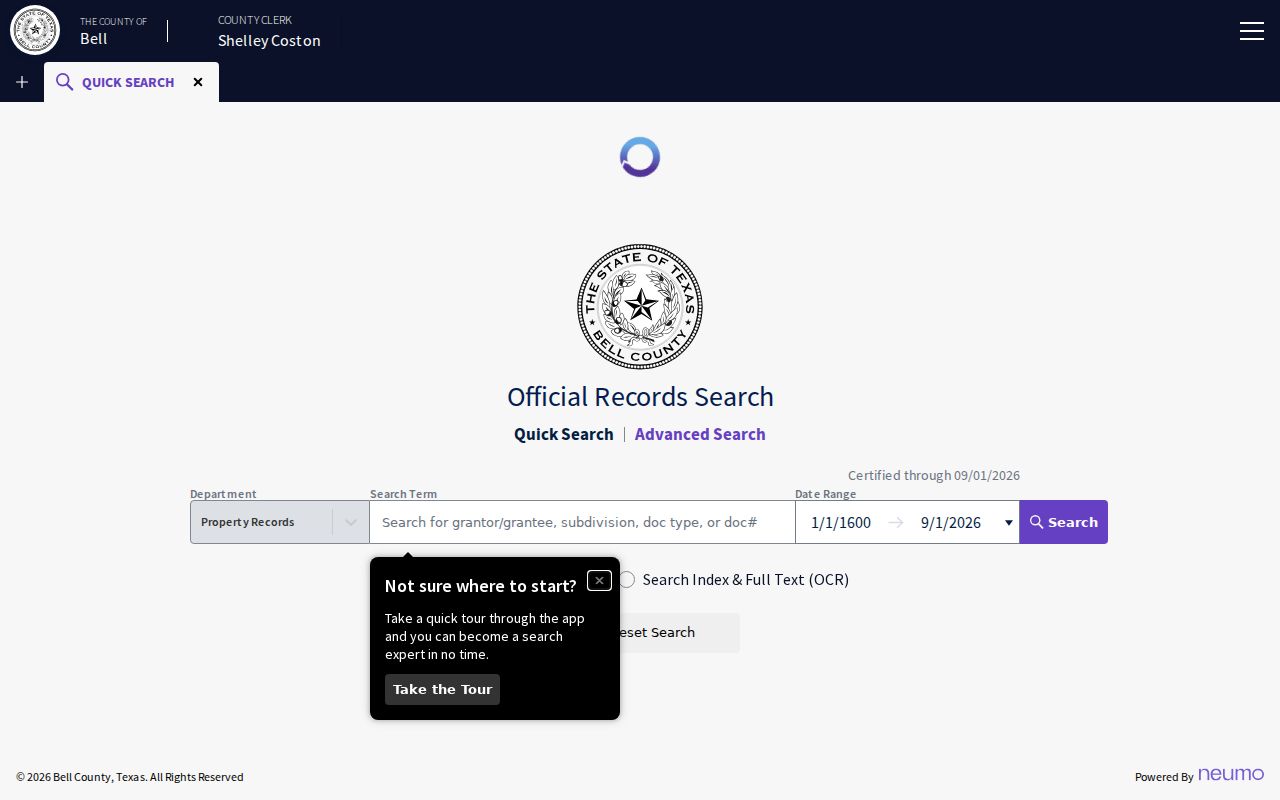
Search the document date and legal description with the party role. That combination helps separate a prior owner from a trustee, lender, heir, or other name that may appear in the same instrument.
Fort Cavazos Previous Resident Names
Historic searches need an alias check before they need more names. Camp Hood was activated during World War II, Fort Hood became permanent in 1950, and Killeen expanded rapidly after that change. A 1970 directory, deed, map, or obituary can therefore use Fort Hood or a surrounding community rather than Fort Cavazos. USPS documented the Fort Hood-to-Fort Cavazos postal change for ZIP 76544 in 2023, while current Army material may still use legacy wording.
Try the exact old label shown on the source, then test Fort Hood, Camp Hood, Fort Cavazos, the street spelling, and the county. This is a records-history method, not a claim that those labels are the same jurisdiction. The installation crosses Bell and Coryell Counties, and county filing systems remain separate. An old city record may also belong to Killeen because municipal boundaries and services changed over time.
Population change gives this address trail a local setting. Killeen grew from 7,045 in 1950 to 35,507 in 1970 after the post became permanent. That growth helps explain why older evidence can shift between rural county, city, and installation sources. It does not fill a gap in a household timeline by itself.
Trace Fort Cavazos Previous Deeds
A deed chain is the backward ownership trail for one parcel. Start with the county that the current parcel actually occupies. Bell County Clerk records are the correct route on the Bell side; Coryell parcels should be checked against Coryell CAD eSearch and the Coryell eDoc search. Coryell eDoc accepts date ranges, partial full names, and instrument numbers, while the exact online cutoff was not stated in the inspected materials.
- Find the parcel or account and save its county, Property or Geographic ID, situs, subdivision, lot or block, and legal description.
- Use the current owner-of-record only as a lead, then find the acquisition instrument by grantee, date, document number, or legal-description clue in the county clerk index.
- Read the earlier instrument for the seller, who is commonly the grantor. Search that person as a grantee to locate the deed by which that person acquired the property.
- Repeat the date, instrument, and party-role notes backward. Check each transfer against the same legal description because a street name or mailing label can change.
- When the online path stops, use the clerk, TSLAC inventory, or Baylor repository route for deed books, index reels, and microfilm rather than treating a portal gap as a missing history.
- Grantor
- The party transferring an interest in the recorded instrument. A grantor is not necessarily a past occupant.
- Grantee
- The party receiving an interest. Following a grantee backward can reveal an earlier acquisition deed.
- Chain of title
- The dated sequence of recorded transfers affecting one parcel. It tracks ownership interests, not every household.
- Legal description
- The lot, block, subdivision, metes, or other parcel wording that stays more reliable than a changing street label.
For an on-post facility, stop before forcing the address into a county chain. Federal land and installation buildings can require the Army office or FOIA and Privacy Act route instead of an appraisal or deed search.
Note: Preserve each instrument number, record date, and party role so a later reader can reproduce the route without assembling a living-person address history.
Fort Cavazos Previous Address Maps
When a deed and a directory use different address forms, test the place before choosing between them. Killeen street-name rules recognize changes for directional coherence, duplicate names, suffixes, misspellings, honorifics, and neighborhood history. The city GIS annexation-history layer also supplies a year field, so a road may have entered city-service territory after an older directory was printed. A plat or legal description can bridge the old and current names.
The Library of Congress Killeen Sanborn item covers 1926-1937 mapping across seven sheets. It can show whether a building footprint existed, its use, nearby streets, and the block relationship. It cannot identify an occupant. Pair it with a dated directory, deed, tax roll, or archival citation, and keep the date of each layer visible in the notes.
The Bell County TSLAC inventory supplies the archive route for early deed, probate, marriage, death, and other county series.
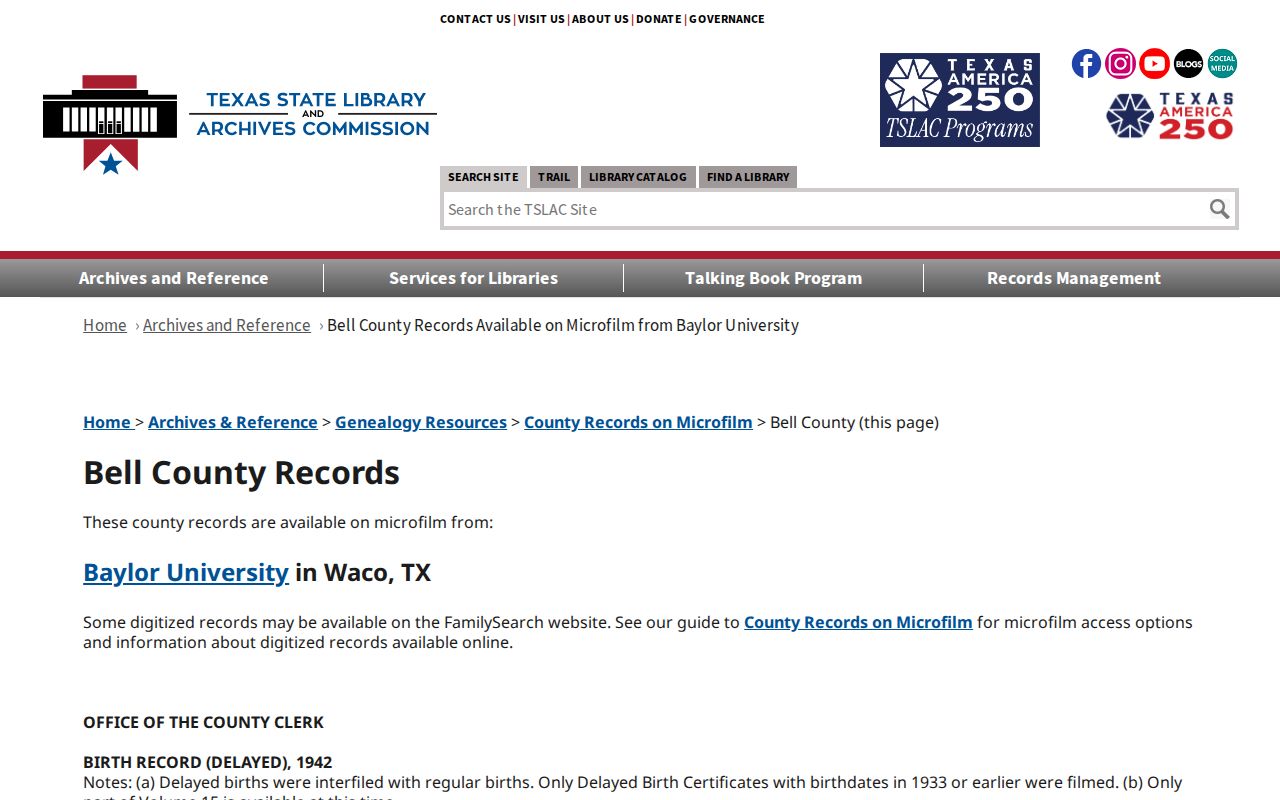
Use an inventory as a request map. The reel, date span, and record-series name make a repository inquiry far more precise than a general request for every record about an address.
Fort Cavazos Past Residents Timeline
Ownership is only one layer of who lived here before. UT catalog metadata identifies Killeen R.L. Polk directory years for 1965, 1970, 1972, 1974, 1976 through 1978, 1980 through 1981, and December 2003. The collection index is bibliographic evidence, not a reviewed household page. For the volumes themselves, use the natural access route described by the Fort Cavazos city directory collection page, then record the exact volume and page.
Pair a directory year with the nearest available census release, but do not treat the pair as continuous occupancy. The 1950 census is the latest generally released decennial schedule under the National Archives' 72-year rule; the 1960 household schedule is not expected to open until 2032. Census geography can use a different city or county concept than a current Fort Cavazos label.
- Write the directory's address, label, publication year, and spelling exactly as printed.
- Compare the same street or legal description to the closest census, deed, map, or tax record available for that era.
- Use an obituary, cemetery inventory, or probate record to test a family connection or departure date, while distinguishing archive leads from primary proof.
- Keep conflicts visible, especially when an address changed form or a surname appears in both Bell and Coryell research.
Bell County Museum materials are in-library only, and the Bell County Historical Society offers research by appointment. Killeen Public Library can provide catalog and reference routing. These access modes matter because no stable public Killeen reverse-directory run or standalone obituary index was located in the inspected sources.
Fort Cavazos Previous Archive Routes
Older records split by county as sharply as current ones. Coryell's TSLAC inventory lists tax rolls from 1855-1910, probate minutes from 1854-1934, wills from 1867-1930, a jail register from 1891-1943, and a scholastic census from 1926-1946. These are time slices, not a modern directory. Use the collection title and historical context, especially where a record series contains sensitive material.
For Bell-side research, the state inventory identifies deeds from 1850-1902, deaths from 1903-1937 with an index extending toward 1989, marriages from 1850-1935, and extensive probate material. Baylor is a TSLAC regional repository for Bell and Coryell holdings. Its finding-aid and microfilm route is often the right fallback after an online index ends.
Use the Killeen Public Library for reference and catalog questions, the Bell County Museum for in-library genealogy materials, and the historical society only with a surname, address, year, and collection request. Those choices keep a Fort Cavazos previous residents search grounded in the custodian that can confirm the record.
Note: An archive catalog entry describes a holding; verify the reel, volume, page, or image before treating it as evidence for an address timeline.
Fort Cavazos Previous Residents Limits
House history has a hard boundary when the trail reaches a living person. Public availability does not permit a bulk profile of present or former households. Do not publish a private home address, phone number, exact birth date, military information, or protected voter details. A CAD mailing address, a ZIP, or an old directory entry also does not prove that someone lives at that address now.
Texas Government Code Chapter 552 opens many government records but retains confidential information. Texas voter confidentiality guidance is particularly important in a military community because eligible people can have residential information suppressed. If a city permit or code record is needed, use a narrow existing-record request with the address, parcel, record type, and date range rather than asking an agency to create a personal dossier.
Lawful use. Fort Cavazos previous residents research is for family history, estate questions, and the story of a property. Texas law bars harassment and stalking; do not use an address trail to watch, contact, or target a living person.